Elements of the protection system
A SPD must always be installed at the origin of the electrical installation.
Location and type of SPD
The type of SPD to be installed at the origin of the installation depends on whether or not a lightning protection system is present. If the building is fitted with a lightning protection system (as per IEC 62305), a Type 1 SPD should be installed.
For SPD installed at the incoming end of the installation, the IEC 60364 installation standards lay down minimum values for the following 2 characteristics:
1. Nominal discharge current In = 5 kA (8/20) µs;
2. Voltage protection level Up (at In) < 2.5 kV.
The number of additional SPDs to be installed is determined by:
3. the size of the site and the difficulty of installing bonding conductors. On large sites, it is essential to install a SPD at the incoming end of each subdistribution enclosure.
4. the distance separating sensitive loads to be protected from the incoming end protection device. When the loads are located more than 10 meters away from the incoming-end protection device, it is necessary to provide for additional fine protection as close as possible to sensitive loads. The phenomena of wave reflection is increasing from 10 meters see Propagation of a lightning wave
5. the risk of exposure. In the case of a very exposed site, the incoming-end SPD cannot ensure both a high flow of lightning current and a sufficiently low voltage protection level. In particular, a Type 1 SPD is generally accompanied by a Type 2 SPD.
The table in Figure1 below shows the quantity and type of SPD to be set up on the basis of the two factors defined above.
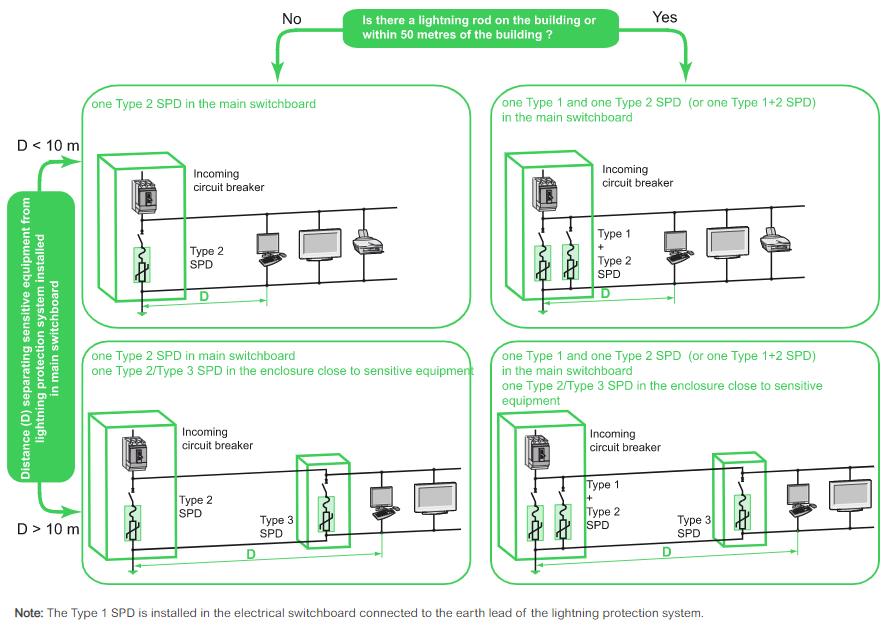
Fig.1 – The 4 cases of SPD implementation
Protection distributed levels
Several protection levels of SPD allows the energy to be distributed among several SPDs, as shown in Figure 2 in which the three types of SPD are provided for:
1. Type 1: when the building is fitted with a lightning protection system and located at the incoming end of the installation, it absorbs a very large quantity of energy;
2. Type 2: absorbs residual overvoltages;
3. Type 3: provides “fine” protection if necessary for the most sensitive equipment located very close to the loads.