Overvoltage may occur in electrical installations for various reasons. It may be caused by:
1. The distribution network as a result of lightning or any work carried out.
2. Lightning strikes (nearby or on buildings and PV installations, or on lightning conductors).
3. Variations in the electrical field due to lightning.
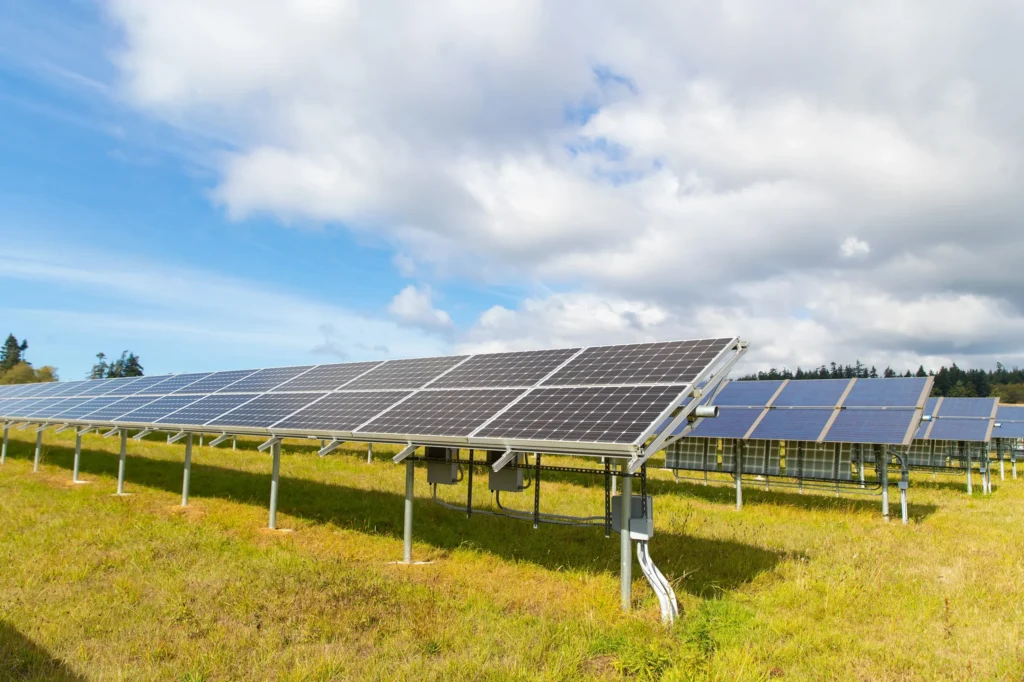
Like all outdoor structures, PV installations are exposed to the risk of lightning which varies from region to region. Preventive and arrest systems and devices should be in place.
Protection by equipotential bonding
The first safeguard to put in place is a medium (conductor) that ensures equipotential bonding between all the conductive parts of a PV installation.
The aim is to bond all grounded conductors and metal parts and so create equal potential at all points in the installed system.
Protection by surge protection devices (SPDs)
SPDs are particularly important to protect sensitive electrical equipments like AC/DC Inverter, monitoring devices and PV modules, but also other sensitive equipments powered by the 230 VAC electrical distribution n twork. The following method of risk assessment is based on the evaluation of the critical length Lcrit and its comparison with L the cumulative length of the d.c. lines.
SPD protection is required if L ≥ Lcrit .
Lcrit depends on the type of PV installation and is calculated as the following table (Fig. 1) sets out:
Fig. 1 – SPD DC choice
Type of installation
Individual residential premises
Terrestrial production plant
Service/Industrial/Agricultural/Buildings
Lcrit (in m)
115/Ng
200/Ng
450/Ng
L ≥ Lcrit
Surge protective device(s) compulsory on DC side
L < Lcrit
Surge protective device(s) not compulsory on DC side
L is the sum of:
1. the sum of distances between the inverter(s) and the junction box(es), taking into account that the lengths of cable located in the same conduit are counted only once, and
2. the sum of distances between the junction box and the connection points of the photovoltaic modules forming the string, taking into account that the lengths of cable located in the same conduit are counted only once.
Ng is arc lightning density (number of strikes/km2/year).
Fig. 2 – SPD selectio
SPD Protection
Location
PV modules or Array boxes
Inverter DC side
Inverter AC side
Main board
LDC
LAC
Lightning rod
Criteria
< 10 m
> 10 m
< 10 m
> 10 m
Yes
No
Type of SPD
No need
“SPD 1″Type 2
“SPD 2″Type 2
No need
“SPD 3″Type 2
“SPD 4″Type 1
“SPD 4″Type 2 if Ng > 2.5 & overhead line
Installing an SPD
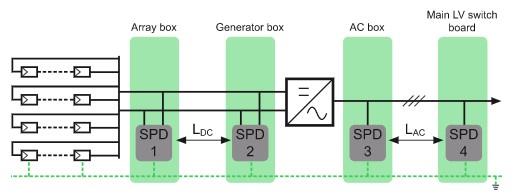
The number and location of SPDs on the DC side depend on the length of the cables between the solar panels and inverter. The SPD should be installed in the vicinity of the inverter if the length is less than 10 metres. If it is greater than 10 metres, a second SPD is necessary and should be located in the box close to the solar panel, the first one is located in the inverter area.
To be efficient, SPD connection cables to the L+ / L- network and between the SPD’s earth terminal block and ground busbar must be as short as possible – less than 2.5 metres (d1+d2<50 cm).
Safe and reliable photovoltaic energy generation
Depending on the distance between the “generator” part and the “conversion” part, it may be necessary to install two surge arresters or more, to ensure protection of each of the two parts.
Surge protective decives, also known as lightning arresters, are electronic device that provide safety protection for various electronic equipment, instrumentation, and communication lines. When a surge current or voltage is suddenly generated in an electrical circuit or communication lines due to external interference, thesurge protective decives can conduct the shunt in a very short period of […]
As the world is moving towards renewable energy, solar power has gained a lot of interest from people and businesses alike. With the growing demand for solar power, the need for solar connectors has increased significantly. The widely usage of solar connectors in the renewable energy industry is undeniable. 1. Solar connectors are essential components in solar […]
To choose the best technology for surge protective devices, we should consider the following technical parameters (include but not limited to): 1. Type of surge protective devices according to EN61643-11/IEC 61643-11 2. Nominal Voltage (Un) 3. Maximum Continuous Operating Voltage (Uc) /Maximum Continuous Operating Voltage for PV System (Ucpv) 4. Voltage Protection Level (Up) 5. Nominal Discharge Current (In) 6. Maximum Discharge […]
We use cookies to enhance your browsing experience, serve personalised ads or content, and analyse our traffic. By clicking "Accept All", you consent to our use of cookies.